We know that the majority of the clitoris is internal and that the external nub is just the tip of the iceberg, but you’d be hard-pressed to find that information in a sexual health textbook.
In fact, you’d be hard-pressed to find many mentions of the clitoris at all in a sexual health textbook.
Sex education standards across the country display not only a lack of comprehensive, accurate information but an overwhelming tolerance for blatant misinformation.
Not By The Book: Misinformation In Sex Health Curriculum
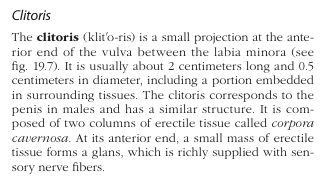
Hole’s Essentials of Anatomy and Physiology describes the clitoris as “about 2 centimeters long.”
Credit: McGraw-Hill

Biology by Miller and Levine leaves the clitoris out entirely.
Credit: Prentice Hall
This isn’t entirely surprising. State standards for sex ed are hardly comprehensive. Even the most inclusive sexual health curriculums fail to adequately address female anatomy and sexual pleasure. These are the realities of sex ed standards, state-by-state.

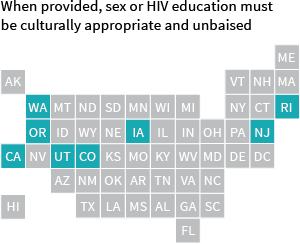
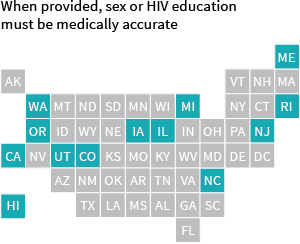


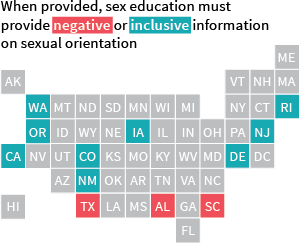
Graphics by Alissa Scheller. Source: Guttmacher Institute, April 2015
According to the Guttmacher Institute, a reproductive rights organization that tracks state sex education laws, “culturally appropriate and unbiased” sex education typically means that the education must be appropriate for students of different races, ethnicities, genders, sexual orientations and cultural backgrounds. States requiring discussions of negative outcomes of teen sex include things like the emotional, economic or legal consequences of sex, as well as sexually transmitted diseases and pregnancy, in their laws.
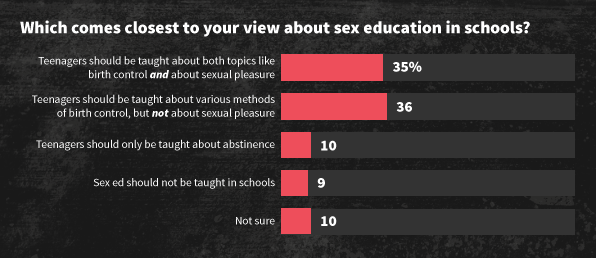
Few states require sex ed to be medically accurate, and many allow teachers to use scare tactics and focus exclusively on the negative consequences of sexual activity. Not a single state requires its schools to address or discuss sexual pleasure, even though about a third of Americans think teenagers should be learning about it, according to a HuffPost/YouGov poll.

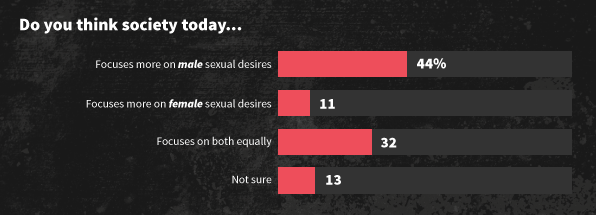
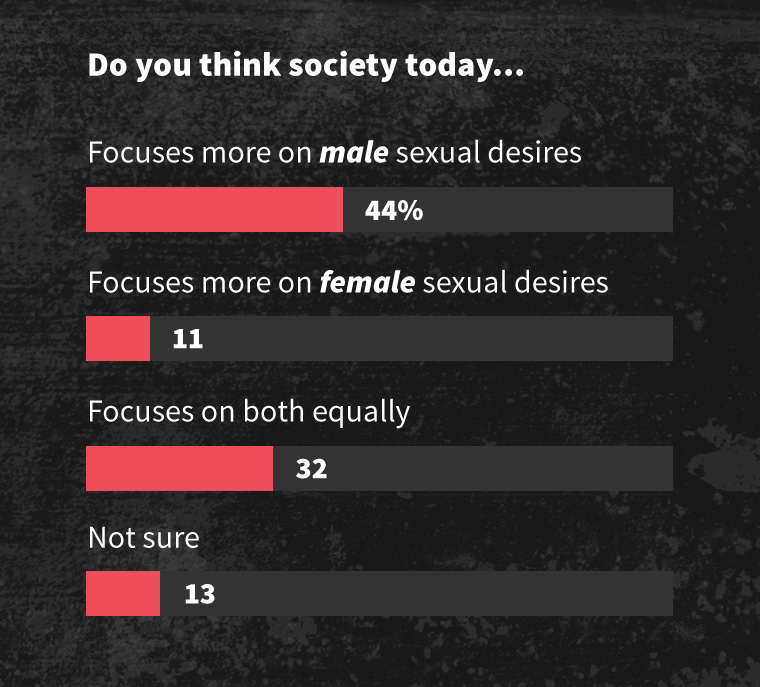
The poll also revealed that both men and women believe society is primarily focused on male desire.
While you’d think that in the age of information, the truth wouldn’t be hard to come by, when it comes to the clitoris, the Internet seems to perpetuate more myths than truths.
Even Google thinks the clit is a small nub rather than a large organ.
Without accurate, up-to-date information from a safe and reliable source, young people are left woefully unprepared to become sexually healthy and informed adults.
A recent study found that 29 percent of female college students could not locate the clitoris on a diagram of the vulva.
How can we address this information gap? We have a few ideas — and we can start by filling in a missing chapter’s worth of information about the clitoris.